
Why I Use the “Theatre of the Oppressed” to Fuel Personal Clarity and Growth
In the late 1990s, my approach to human development was forever changed. I wasn’t sitting in a traditional seminar or reading a self-help book; I was deep in the world of Forum Theatre, applying the radical methods of practitioner Augusto Boal across a wide range of sectors and organisations.
What I witnessed during those years shaped the very foundation of how I work today. I realised that most people don’t need a “coach” to tell them what to do. They need an enabler—a facilitator who provides a structured space for them to uncover the confidence, motivation, and self-belief that is already sitting dormant within them.
The Architect of Human Potential: Augusto Boal
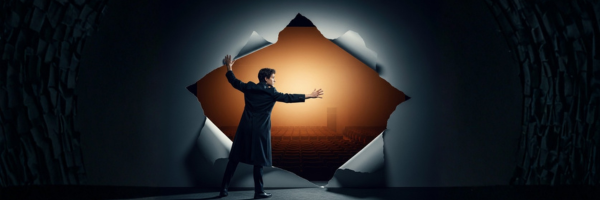
Boal was a visionary who believed that traditional theatre encouraged passivity. He saw the “Fourth Wall”—the invisible barrier between the actors on stage and the audience in the seats—as a metaphor for how many of us live our lives: watching from the sidelines, following a script we didn’t write.
His solution was to turn the audience into the Spect-actor.
In my work using Forum Theatre, I saw firsthand what happens when the “audience” is invited to stop the action, step onto the stage, and try a different approach to a challenge. They weren’t just thinking about change; they were actively rehearsing it.
Facilitation Over Traditional Coaching
This distinction is vital to the Arvus philosophy. Traditional coaching often implies a hierarchy where one person holds all the answers. A facilitator—which is how I see my role—creates the environment and framework where you become the true expert on your own life.
My years of using Boal’s methods taught me a fundamental truth: you already possess the internal wisdom and capability to navigate your most complex challenges. You don’t need to be “fixed.” You simply need a quiet, supportive space to practice being the protagonist of your own story.
The 4 Acts of Personal Transformation
This isn’t a concept I just read about in a textbook; it is a lived practice refined over decades of helping individuals create lasting change. In Arvus, we navigate growth through four distinct Acts:
- Act I: Clarity (The Vision)Most goal-setting starts with the “problem.” I believe that’s the wrong way around. When we focus purely on obstacles first, change can feel impossible. Instead, we start by defining your Desired Future—creating a clear “North Star” that pulls you forward.
- Act II: Strength (The Foundation)Once the destination is clear, we build the internal resilience and self-belief needed to step into that new role. This is where your core motivation is unearthed, fortified, and anchored.
- Act III: Application (The Rehearsal)Insight is only potential until it is put into practice. Real confidence grows from consistently applying what you discover about yourself. This is the “Forum”—taking your insights and applying them practically in your daily life.
- Act IV: Sustenance (The Long Run)Growth isn’t a one-off event; it’s an ongoing way of living. We focus on how to maintain your momentum, ensuring your self-belief remains robust long after the first curtain call.
Life First, Always
Boal’s work was fundamentally about empowering the individual human being. He knew that you cannot be a successful “actor” in the world if the “person” behind the role is being ignored.
Here in the Sanctuary, we focus on your personal life first. My role is to facilitate your return to the stage of your own life. You’ve been a spectator for long enough—the stage is yours.
What a great article that really resonates with me.